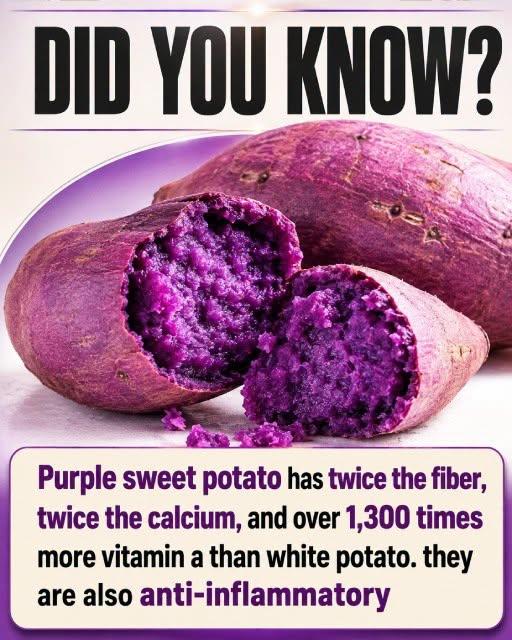
Purple sweet potatoes are colorful root vegetables that provide complex carbohydrates, dietary fiber, vitamins, minerals, and naturally occurring plant pigments called anthocyanins. These pigments give the flesh its distinctive purple color and act as antioxidants.
Research has explored whether purple sweet potatoes may support cardiovascular health, digestion, blood-sugar management, and protection against oxidative stress. Although laboratory and animal studies are promising, many proposed therapeutic benefits have not yet been confirmed in large human clinical trials.
Purple sweet potatoes should therefore be viewed as a nutritious food rather than a treatment for disease. They can be included in a balanced diet by baking, roasting, steaming, boiling, or mashing them.
What Is a Purple Sweet Potato?
Purple sweet potatoes belong to the species Ipomoea batatas, the same species as orange, white, and yellow sweet potatoes. Their purple color comes primarily from anthocyanins, a family of pigments also found in blueberries, blackberries, purple cabbage, cherries, and black rice.
Several varieties are available, including Okinawan, Stokes Purple, and Japanese cultivars such as Ayamurasaki. Their skin and flesh colors differ according to the variety. Some have pale skin and deep purple flesh, while others have purple skin as well.
Purple sweet potatoes are sometimes confused with purple yams or ube. Ube belongs to the species Dioscorea alata and is a true yam, while purple sweet potatoes belong to the morning-glory family. Although they can sometimes be used in similar recipes, they are botanically different and may vary in flavor, texture, and nutritional composition.
Purple Sweet Potato Nutrition
The exact nutritional content depends on the variety, portion size, growing conditions, and cooking method. In general, purple sweet potatoes provide:
- Complex carbohydrates
- Dietary fiber
- Potassium
- Vitamin C
- Vitamin B6
- Manganese
- Small amounts of several other vitamins and minerals
- Anthocyanins and other polyphenols
Unlike many orange sweet potatoes, purple varieties may not contain equally high amounts of beta-carotene. The specific nutritional profile varies, so it is useful to eat sweet potatoes of several colors rather than assuming one variety provides every benefit.
Purple Sweet Potatoes Are Rich in Anthocyanins
Anthocyanins are water-soluble pigments responsible for red, blue, and purple colors in many plants. They help protect plants against environmental stress and may also provide antioxidant activity when consumed as part of the human diet.
Laboratory tests show that purple sweet potato extracts can neutralize free radicals under experimental conditions. However, antioxidant activity measured in a laboratory does not translate directly into a specific level of protection inside the human body.
Digestion, metabolism, absorption, portion size, and food preparation all influence how these compounds behave after they are consumed. Purple sweet potatoes can contribute to an antioxidant-rich diet, but comparisons claiming they are several times “better” than blueberries or another food should be interpreted cautiously because testing methods and serving sizes differ.
They Can Contribute to a High-Fiber Diet
Purple sweet potatoes contain dietary fiber, especially when eaten with their edible skin. Fiber supports normal bowel function, adds bulk to stool, and can contribute to a feeling of fullness after a meal.
Fiber also provides nourishment for certain beneficial intestinal microorganisms. As gut bacteria ferment some types of fiber, they produce compounds such as short-chain fatty acids that help support the intestinal environment.
The amount of fiber in one serving is not enough to meet an entire day’s needs. For greater dietary variety, combine purple sweet potatoes with vegetables, fruit, beans, lentils, whole grains, nuts, and seeds.