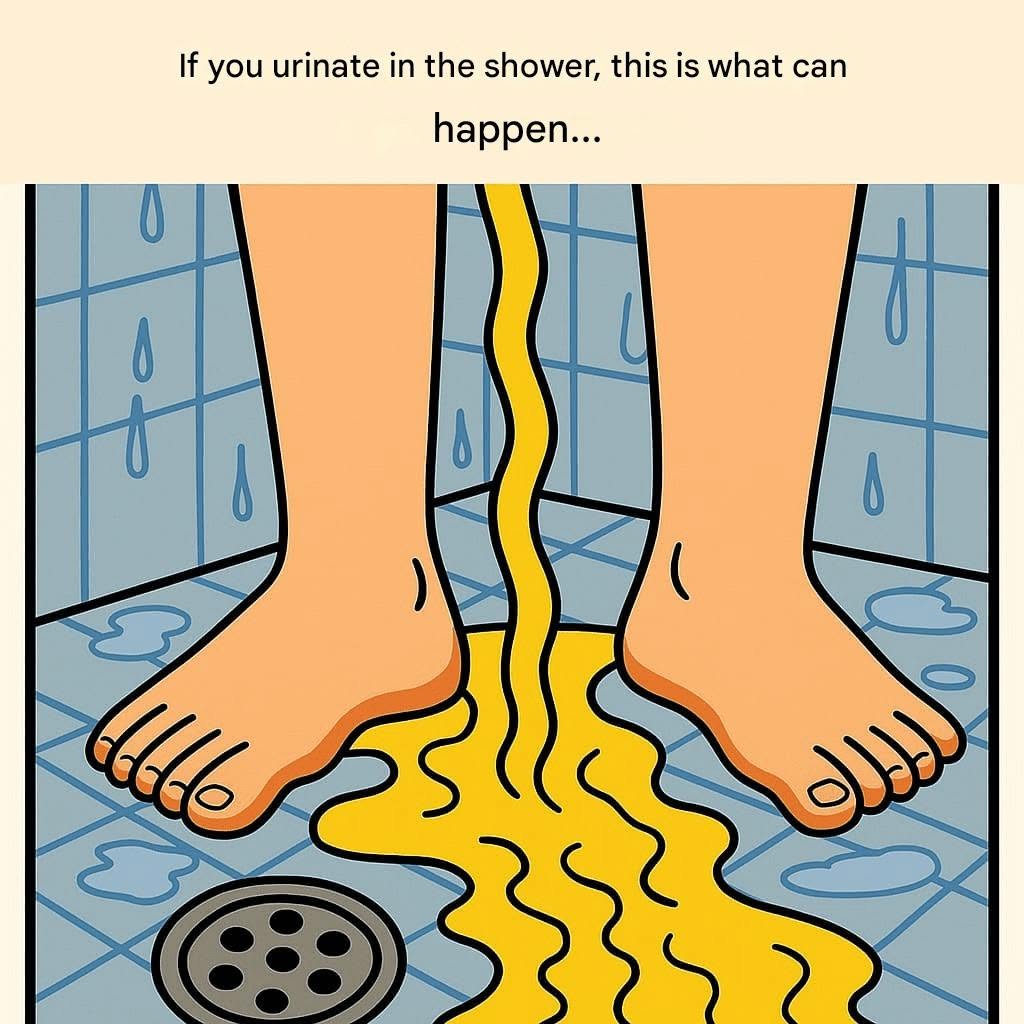
Peeing in the shower is a topic that often generates laughter, embarrassment, and debate. While some people consider it unhygienic or unpleasant, others see it as a harmless habit that may even save water.
So, what actually happens when you pee in the shower? Here is what is worth knowing.
The Science Behind It
1. Hygiene and Safety
A common misconception is that urine is always sterile. In reality, urine can contain small amounts of bacteria, even in healthy people.
For most healthy individuals, however, urinating in their own shower is unlikely to create a significant hygiene problem, especially because the urine is quickly diluted and washed down the drain with running water.
It is still important to rinse the shower normally and maintain good bathroom hygiene.
2. Water Conservation
One practical argument in favor of urinating in the shower is water conservation.
A toilet flush can use several liters of water depending on the type and age of the toilet. If someone urinates while already taking a shower instead of using an additional toilet flush, a small amount of water may be saved.
Over time, those savings could add up, particularly in households trying to reduce water consumption.
3. Convenience and Relaxation
Warm water can relax the muscles involved in urination, which is one reason some people naturally feel the urge to urinate when they enter the shower.
For some people, this simply makes the shower a convenient place to empty the bladder.
However, regularly associating running water with urination may potentially strengthen that behavioral association in some individuals, so it is not necessarily a habit everyone needs to develop.