Most homemade examples have little financial value, but commercially packaged novelty versions may interest collectors of vintage toys, magic tricks, joke-shop merchandise, or advertising memorabilia.
Potential value depends on factors such as:
- The age of the item
- The manufacturer
- The condition of the original packaging
- Whether printed instructions remain intact
- The rarity of the design
- Documented history or provenance
An unopened or complete example in original packaging may be more desirable than a loose homemade device. Before cleaning an item that appears old, photograph it and look for names, patent numbers, printed labels, or other identifying marks. Aggressive cleaning can remove details that help establish its history.
A Reminder of Entertainment Before the Digital Age
Today, people share jokes instantly through videos, memes, and social media. Earlier generations relied on novelty toys, handwritten notes, trick packages, and simple mechanical devices.
The rattlesnake eggs prank reflects that era of entertainment. It required no batteries, electronics, or complicated instructions. A rubber band, a washer, a wire frame, and someone’s curiosity were enough to create a memorable surprise.
Its continued ability to confuse people also demonstrates how quickly the purpose of an everyday object can be forgotten. Once separated from its envelope and explanation, the device becomes a miniature mystery.
The Bottom Line
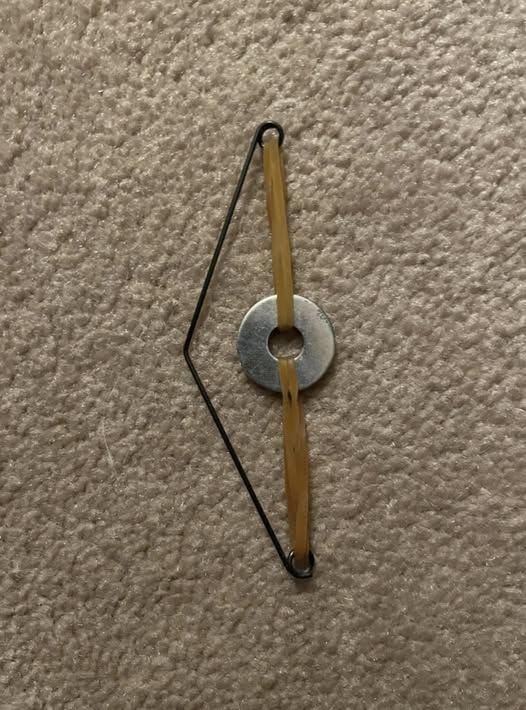
If you find a small wire frame containing a twisted rubber band and metal washer, it is probably not a missing part from a machine or an unusual household tool. It is most likely a traditional rattlesnake eggs envelope noisemaker.
The washer is wound to store tension in the rubber band. When released inside an envelope or folded card, it spins rapidly and produces a startling rattling sound. The joke was designed to make the recipient briefly imagine that something alive was moving inside.
It may look like a meaningless collection of old materials, but it represents a clever piece of practical-joke history—one that entertained families, schoolchildren, coworkers, and joke-shop customers long before digital entertainment existed.