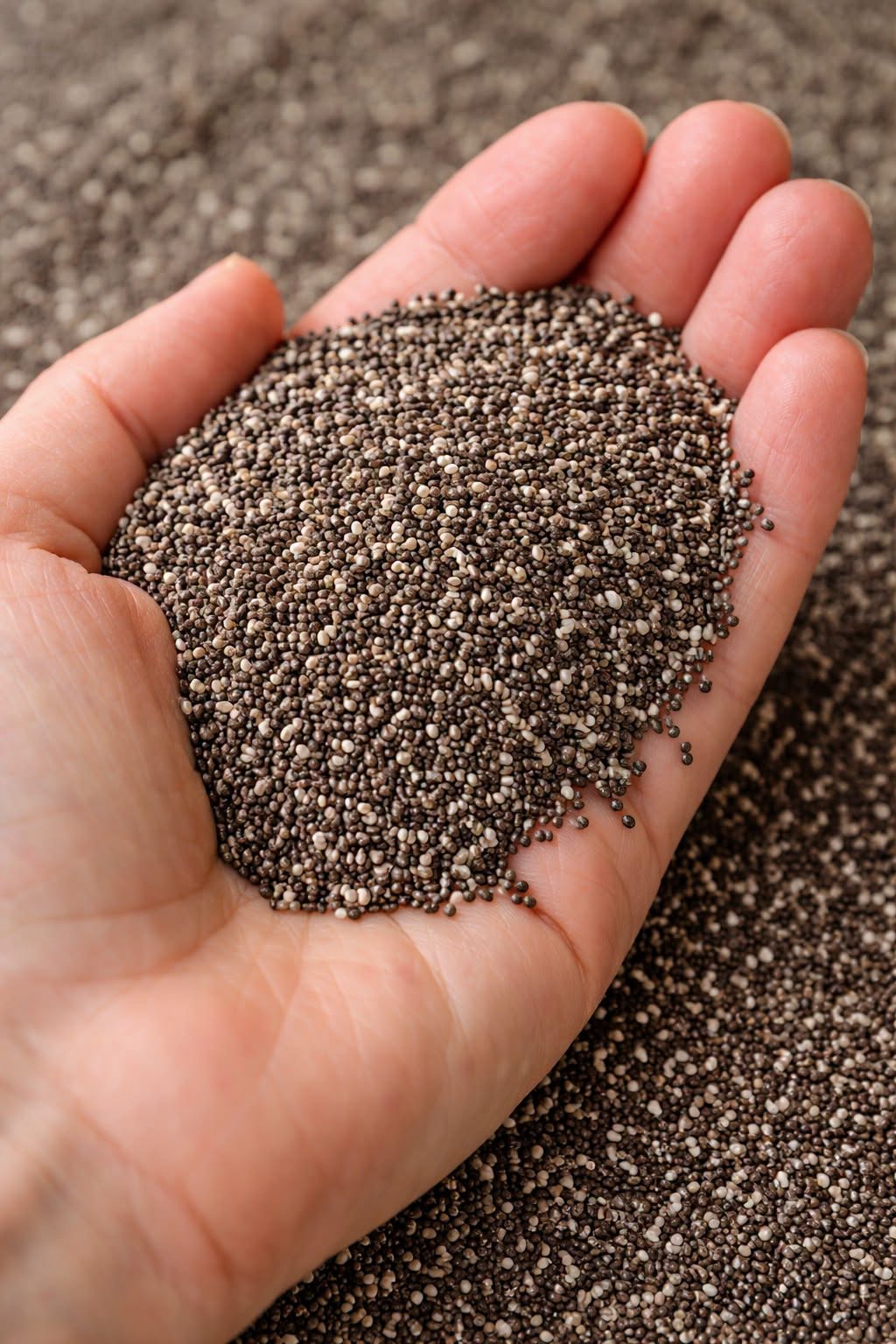
Chia seeds are generally well tolerated in ordinary food quantities, but possible problems include:
- Gas and bloating
- Abdominal cramps
- Diarrhea or constipation
- Choking or obstruction when dry seeds are consumed improperly
- Allergic reactions
- Potential interactions with certain medications
Choking and Swallowing Risk
Because chia seeds swell rapidly in liquid, people with difficulty swallowing, narrowing of the esophagus, or a history of food impaction should consult a healthcare professional before consuming them.
Never eat a spoonful of dry chia seeds on its own. Hydrate the seeds or mix them thoroughly into a moist food before consumption.
Chia Seed Allergy
Chia allergy appears uncommon, but allergic reactions are possible. Symptoms may include itching, hives, swelling, vomiting, wheezing, dizziness, or difficulty breathing.
Anyone experiencing throat swelling, breathing difficulty, or a rapidly progressing reaction requires emergency medical attention.
People allergic to sesame, mustard, or other seeds should introduce chia cautiously and seek professional advice when appropriate because cross-reactivity may occur in some individuals.
Medication Considerations
Chia seeds may influence blood sugar, blood pressure, digestion, or bleeding risk, although the clinical importance varies. Consult a healthcare professional before making chia a major daily supplement if you take:
- Diabetes medication
- Blood-pressure medication
- Anticoagulant or antiplatelet medication
- Medicine affected by major changes in fiber intake
Fiber may alter the absorption of certain medicines. A pharmacist can advise whether chia should be separated from a particular dose.
Who Should Seek Advice Before Eating Chia Seeds?
Professional guidance may be appropriate for people with:
- Swallowing disorders
- Esophageal narrowing
- Gastroparesis
- Active intestinal obstruction
- A medically prescribed low-fiber diet
- Severe digestive disease
- A known seed allergy
- Complex medication regimens
Where to Buy Chia Seeds
Chia seeds are available in many supermarkets, health-food shops, and online stores. Choose a sealed product from a reputable seller and check the expiration date.
The seeds should smell mild and fresh. Discard them if they develop a rancid, paint-like, or otherwise unpleasant odor.
How to Store Chia Seeds
Store whole chia seeds in a tightly closed container in a cool, dry, dark location. Refrigeration may help preserve freshness in a hot or humid climate.
Ground chia and chia oil are more exposed to oxygen and may deteriorate faster. Keep them tightly sealed and follow package instructions.
Frequently Asked Questions
Can You Eat Chia Seeds Raw?
Yes, but they should be mixed into a moist food or consumed with adequate liquid. Do not swallow dry chia seeds by the spoonful.
Are Black Chia Seeds Healthier Than White Chia Seeds?
Both colors have similar general nutritional profiles. Differences between batches are usually more important than seed color alone.
Do Chia Seeds Burn Belly Fat?
No. Their fiber may support fullness, but chia seeds do not target abdominal fat. Fat loss requires an overall calorie deficit and is influenced by activity, sleep, health, and other factors.
Can Chia Seeds Cure Constipation?
They may support regular bowel movements in some people, but they are not a guaranteed cure. Persistent or severe constipation requires medical evaluation.
Are Chia Seeds Good for Diabetes?
They can fit into many diabetes-friendly diets and may reduce the immediate glucose response to a meal. They do not replace medication, glucose monitoring, or individualized nutritional care.
Do Chia Seeds Need to Be Ground?
No. Unlike whole flaxseeds, whole chia seeds can generally be digested. Grinding is optional and may be useful for texture or certain recipes.
Can You Eat Chia Seeds Every Day?
Many healthy people can eat a moderate amount daily. Start gradually, consume enough fluid, and pay attention to digestive tolerance.
The Bottom Line
Chia seeds are nutritious additions to a balanced diet. They provide fiber, plant-based ALA omega-3 fat, protein, calcium, magnesium, phosphorus, and antioxidant compounds.
The strongest practical benefits are their ability to increase fiber intake, contribute essential fatty acids, add texture to foods, and promote fullness. Evidence for substantial effects on weight loss, heart disease, diabetes, osteoporosis, and inflammation remains mixed.
Use chia seeds in measured portions, hydrate them or mix them into moist foods, and increase intake gradually. They can support good nutrition, but they should not be promoted as a miracle food or used in place of medical treatment.
Disclaimer
This article is intended for general educational purposes and does not replace medical or nutritional advice. Consult a qualified healthcare professional if you have swallowing problems, digestive disease, diabetes, low blood pressure, a seed allergy, or take medicines that may be affected by changes in fiber intake.