Modern dishwashers are generally designed to remove ordinary food residue. Scrape off bones, seeds, large pieces of food, and heavy deposits before loading.
Excessive pre-rinsing can waste water and energy. However, heavily soiled items or food that has dried onto cookware may require soaking or additional preparation. Follow the recommendations supplied with your appliance and detergent.
Use the Correct Amount of Detergent
Too much detergent may leave residue or contribute to cloudiness on glassware. Too little may result in poor cleaning.
Water hardness, the detergent formula, cycle type, and soil level can influence the amount required. Follow the detergent label and dishwasher manufacturer’s instructions rather than adding extra detergent automatically.
Frequently Asked Questions
Can Chef’s Knives Ever Go in the Dishwasher?
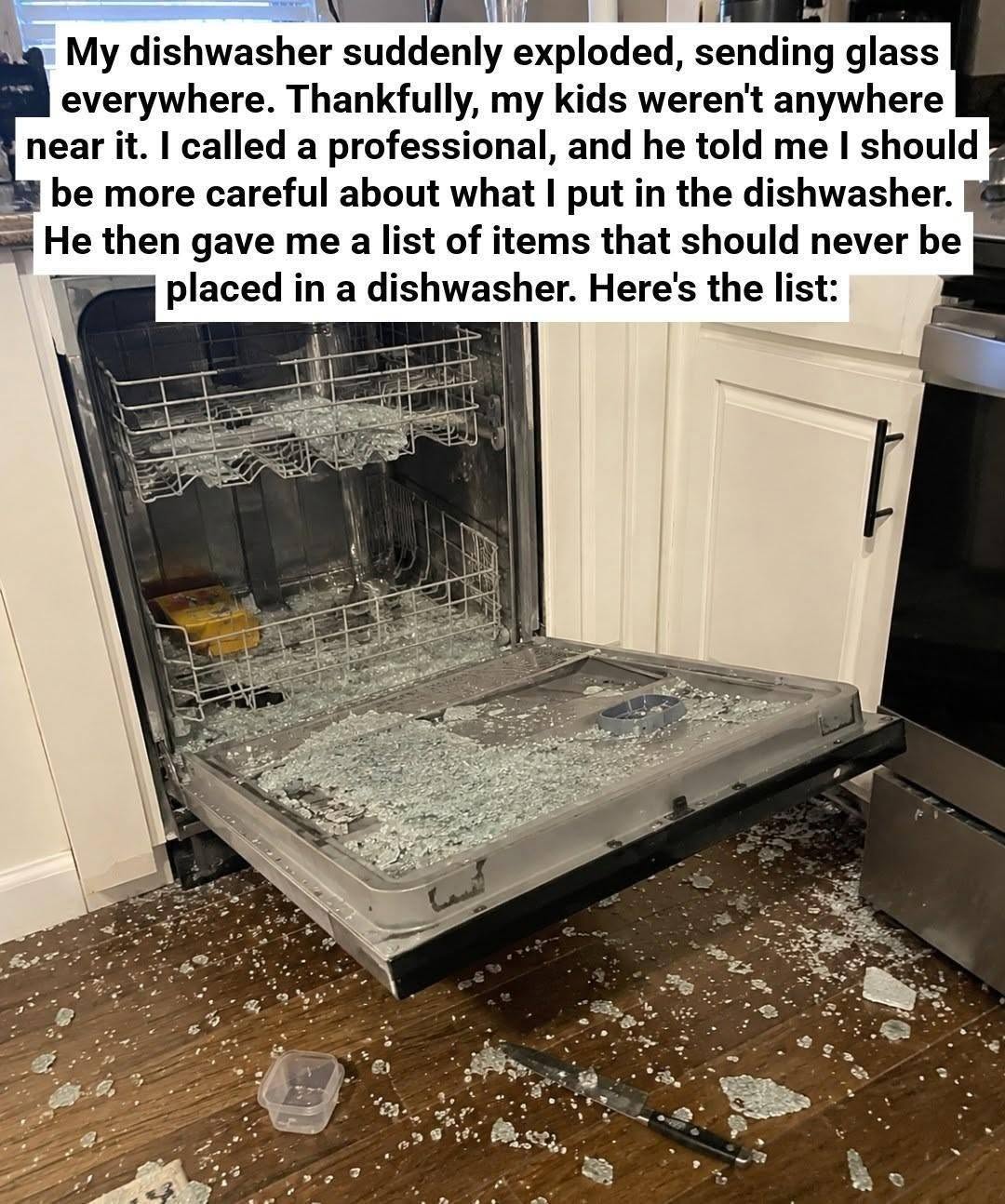
Some manufacturers say their knives are dishwasher-safe, but hand washing is generally better for preserving sharpness, handle materials, and surface finish. Wash the blade carefully, dry it promptly, and store it safely.
Is Cast Iron Ever Dishwasher-Safe?
Traditional seasoned cast iron should not go in the dishwasher. Detergent, moisture, and heat can damage the seasoning and encourage rust. Enameled cast iron may have different instructions, so consult the manufacturer.
Can Wooden Spoons Go in the Dishwasher?
Hand washing is usually better for wooden spoons, cutting boards, and utensils. Heat and prolonged moisture may cause wood to dry, crack, split, or warp.
Can Crystal Go in the Dishwasher?
Some modern crystal is labeled dishwasher-safe, but fine, antique, decorated, or delicate crystal should generally be washed by hand. Crystal can become cloudy, etched, chipped, or broken during repeated dishwasher cycles.
Can Nonstick Pans Go in the Dishwasher?
Only place a nonstick pan in the dishwasher if its manufacturer specifically identifies it as dishwasher-safe. Even then, gentle hand washing may help extend the life of the coating.
Can Copper Go in the Dishwasher?
Dishwasher cleaning is usually not recommended for copper because detergent and heat may tarnish or discolor the surface. Special linings and decorative finishes may also require careful treatment.
Can Travel Mugs Go in the Dishwasher?
Some travel mugs can go in the dishwasher, while others cannot. Always check the manufacturer’s directions because vacuum insulation, seals, coatings, adhesives, and lids differ.
Can Plastic Go in the Dishwasher?
Only plastics clearly labeled dishwasher-safe should be washed in the appliance. Many belong on the top rack to keep them away from intense heat.
A Simple Dishwasher Safety Checklist
- Check the care label before washing an unfamiliar item.
- Hand wash valuable, antique, or sentimental objects.
- Keep sharp chef’s knives out of the dishwasher.
- Never place seasoned cast iron in the dishwasher.
- Protect wood from prolonged heat and moisture.
- Wash delicate crystal and decorated china separately by hand.
- Check plastic products for dishwasher-safe labeling.
- Follow “top rack only” instructions.
- Remove loose paper labels before washing containers.
- Do not overcrowd the racks.
- Make sure the spray arms can rotate freely.
- Clean the dishwasher filter regularly.
- Use detergent made specifically for automatic dishwashers.
Final Thoughts
A dishwasher is one of the most useful appliances in a modern kitchen, but convenience does not mean that every kitchen item belongs inside it.
Sharp knives, wooden utensils, delicate crystal, fine china, seasoned cast iron, some nonstick cookware, copper, and certain insulated bottles are usually better candidates for careful hand washing.
The reasons vary—from dulling blades and warping wood to stripping seasoning, tarnishing metal, and damaging decorative finishes—but the basic solution is simple.
Check the manufacturer’s instructions, examine care labels, and reserve the dishwasher for items designed to tolerate its detergent, heat, moisture, and water pressure.
A few extra minutes of hand washing can protect cookware and tableware that might otherwise need replacing years earlier than necessary. Sometimes the easiest way to make kitchen tools last longer is simply knowing when not to press the dishwasher’s Start button.